
Altitude
6263 m
Elevation gain to the summit
about 1400 m
Climbing time
about 8 h
First ascent
1880
Departs from
Riobamba
Difficulty
9/10
Why climb it
Four reasons to climb Chimborazo
01
The highest mountain in Ecuador
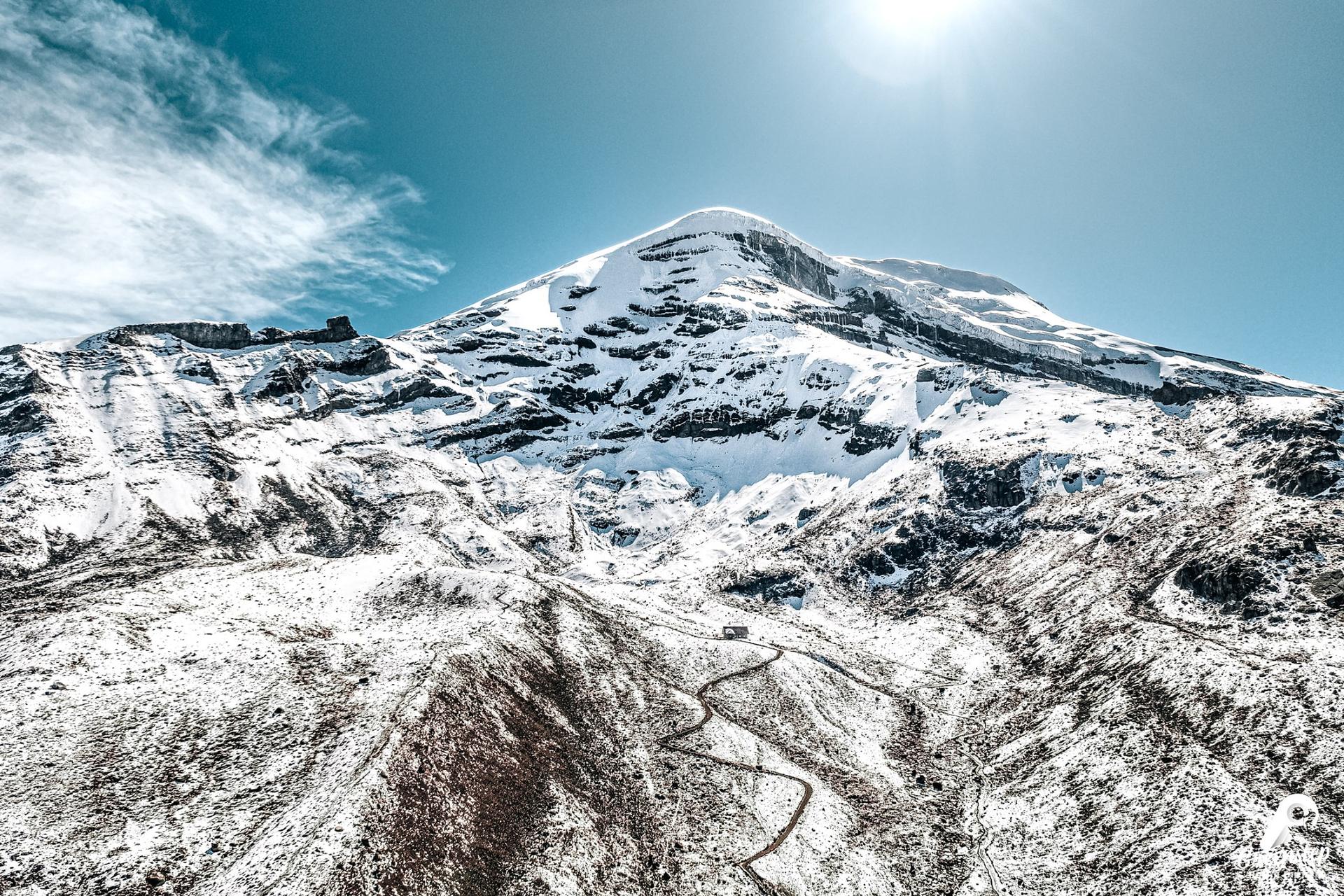
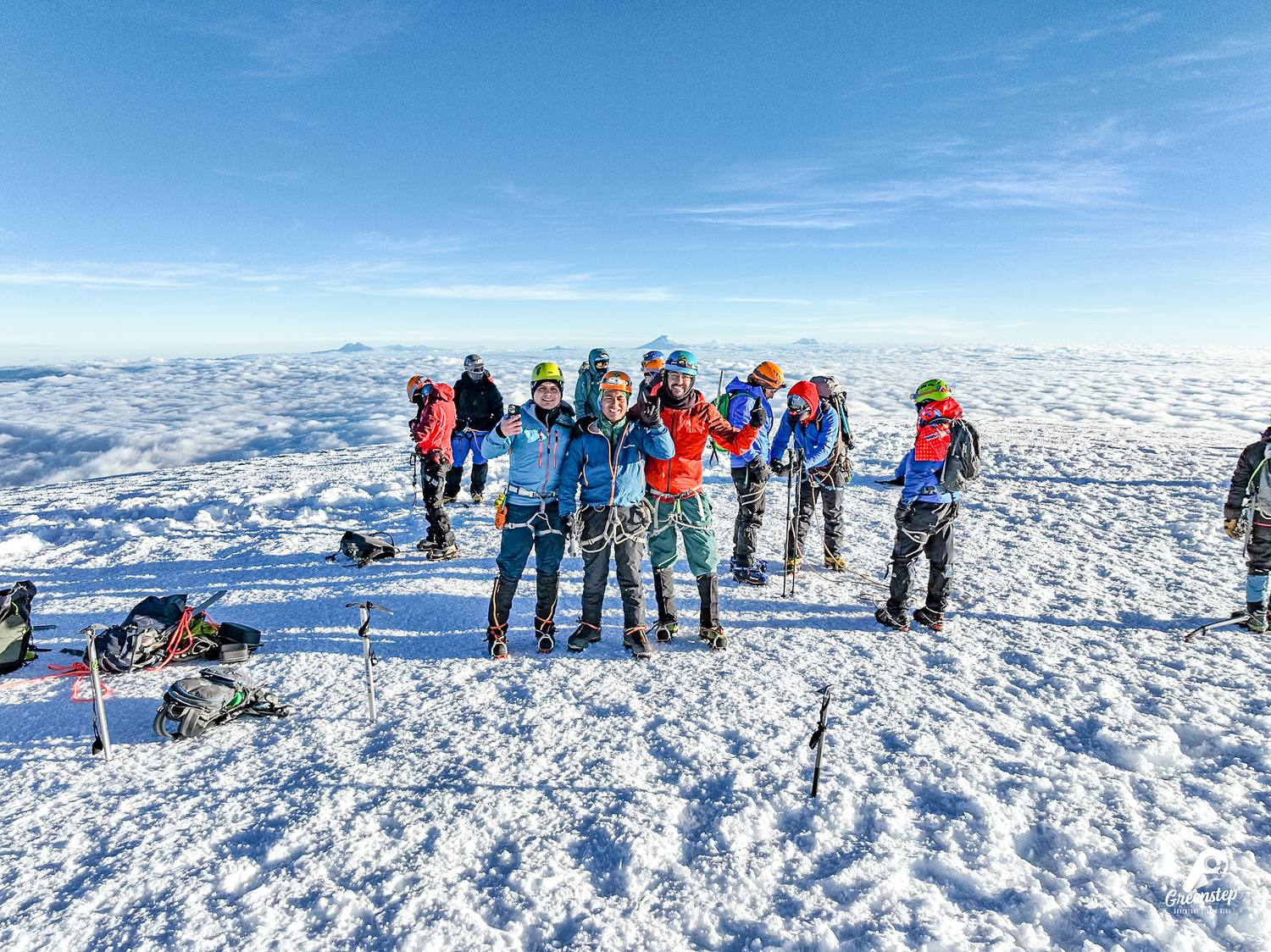
At 6263 m, its summit is the roof of the country and one of the great challenges of Andean high-mountain climbing.
02
The point closest to the sun
Because of the Earth's equatorial bulge, its summit is the point on the surface farthest from the center of the planet.
03
The most demanding in the country
It is considered the most demanding because of its long ridge: about 1400 m of elevation gain and about 8 hours of climbing.
04
The pinnacle of a good progression
It is the natural goal after Iliniza Norte and Cotopaxi, as in our 7-day program.
Who is it for? For mountaineers with previous experience, very good physical fitness and acclimatization. We suggest climbing another snow-capped peak first, such as Cotopaxi.
See the expedition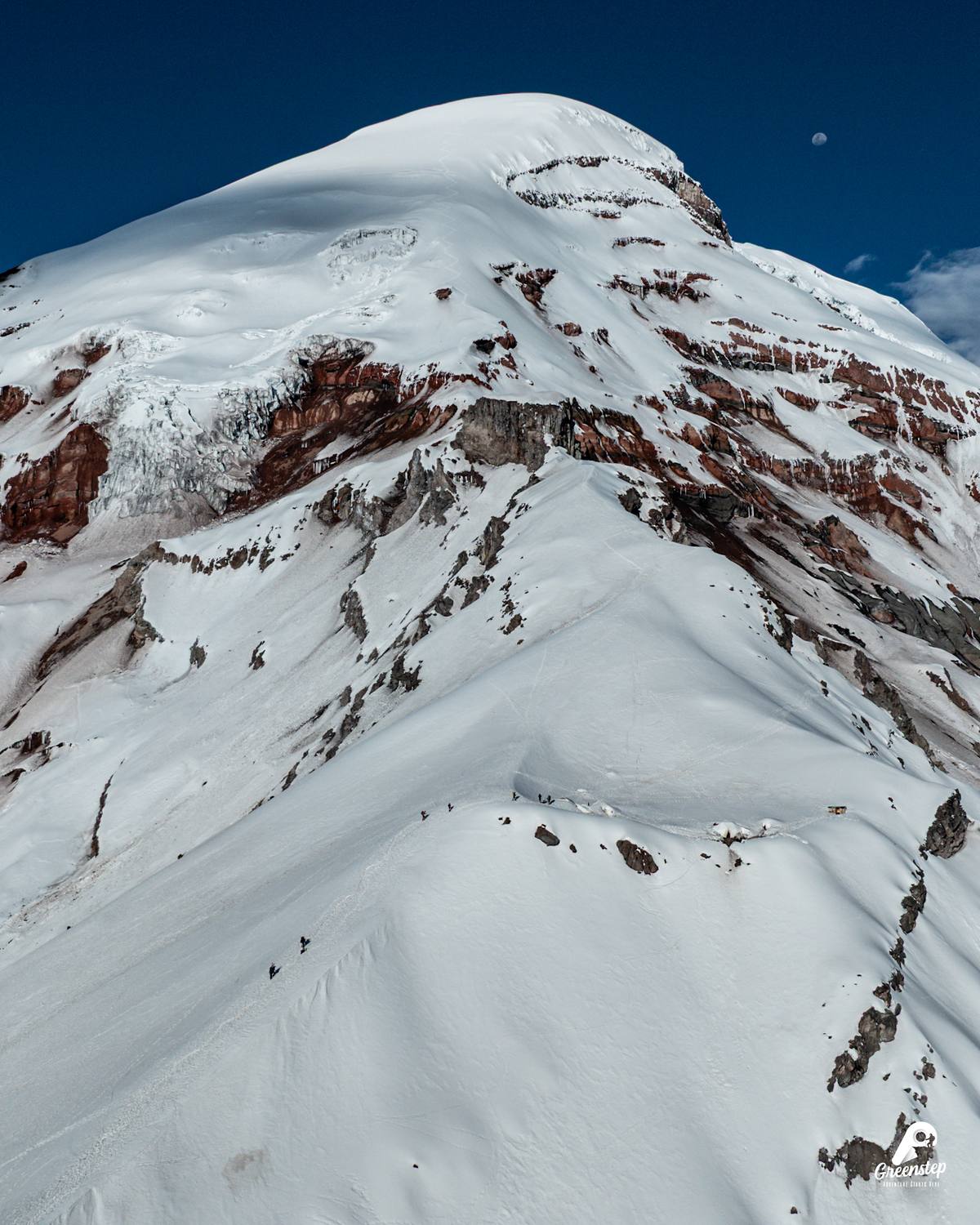
What makes it special
The summit farthest from the center of the Earth
The point farthest from the center of the Earth
Because of the equatorial bulge, its summit is about 2.1 km farther from the center of the planet than that of Everest.
Covered in glaciers
Its glaciers supply water to the provinces of Bolívar and Chimborazo and have lost ice in recent decades.
A vicuña reserve
It is surrounded by the Chimborazo Faunistic Production Reserve, home to vicuñas, llamas and alpacas.
A dormant volcano
Its last eruption is estimated to have been around the year 550 AD.
Its name
Why is it called Chimborazo?
It is a name of Quichua origin and there are several theories. One of the best known joins chimba, “on the other side”, and razu, “snow” or “ice”: “the snow on the other side”.
In Andean tradition he is Taita (father) Chimborazo; his neighbor, Tungurahua, is the Mama, and Pichincha is the Guagua (child).
Quichua
Chimba
on the other side
Razu
snow
First to climb it
Who climbed it first
1802
Alexander von Humboldt, Aimé Bonpland and Carlos Montúfar
The German naturalist and his companions reach about 5875 m, without making the summit.
1880
Edward Whymper, Jean-Antoine and Louis Carrel
First ascent, on January 4, 1880. The British mountaineer reaches the summit with his Italian guides.
1880
Edward Whymper, David Beltrán and Francisco Campaña
That same year, Whymper climbs again by another route, accompanied by two Ecuadorians.
How the climb works
What summit night is like
1
Riobamba → refuge
We leave Riobamba at the time agreed with you and head to the Carrel refuge (or to the High Camp, if you arranged that accommodation).
2
Dinner and rest
Refuge accommodation, with dinner and hot drinks. We settle in and rest a few hours.
3
Between 10 pm and 11 pm, the summit
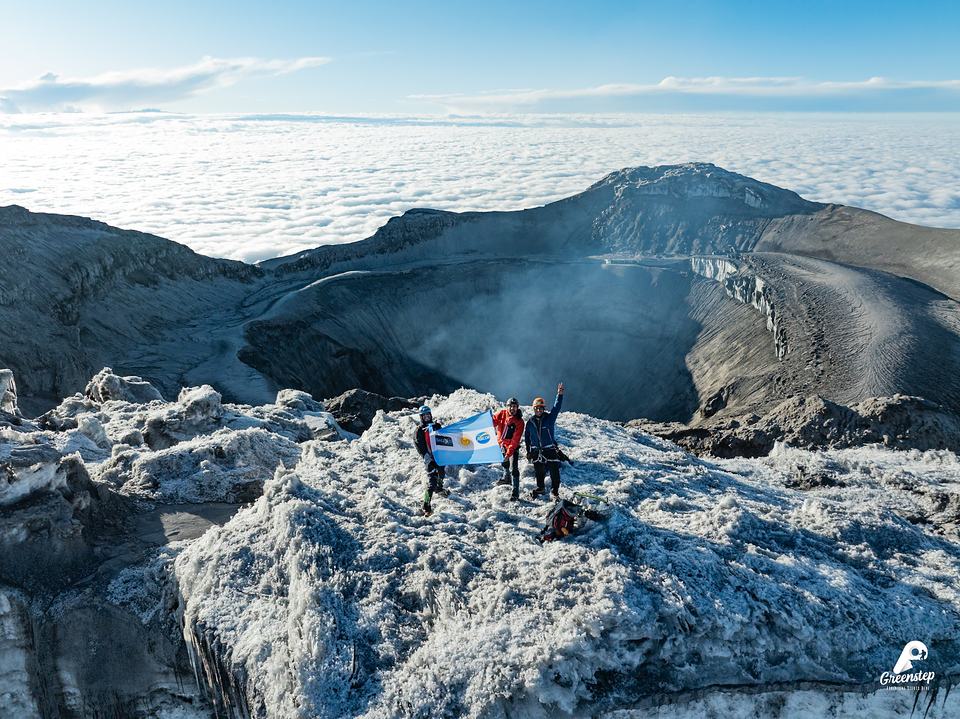
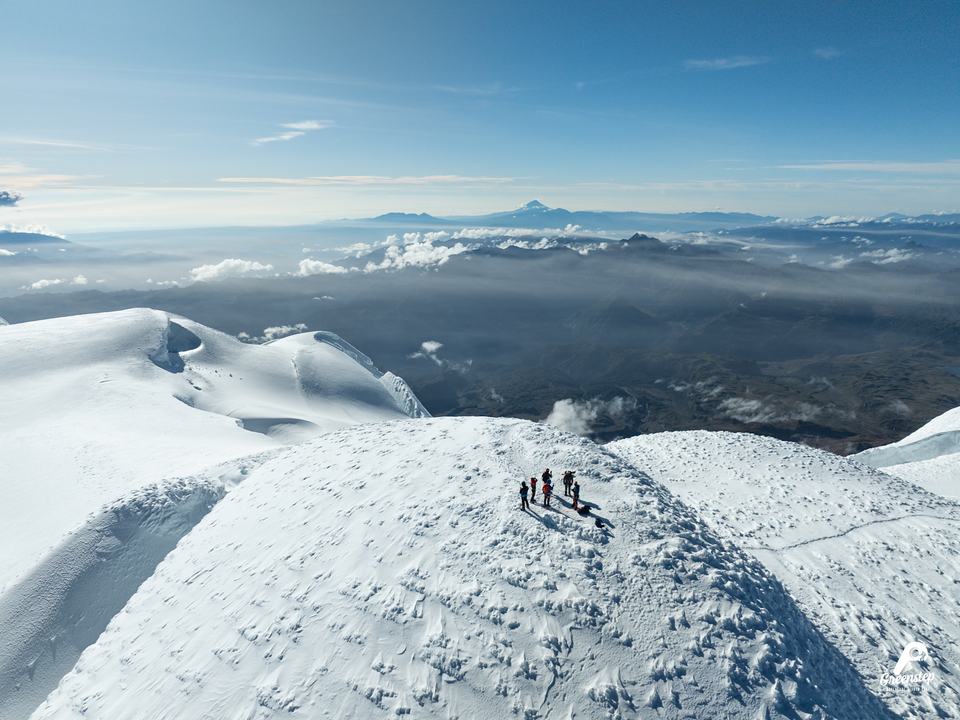
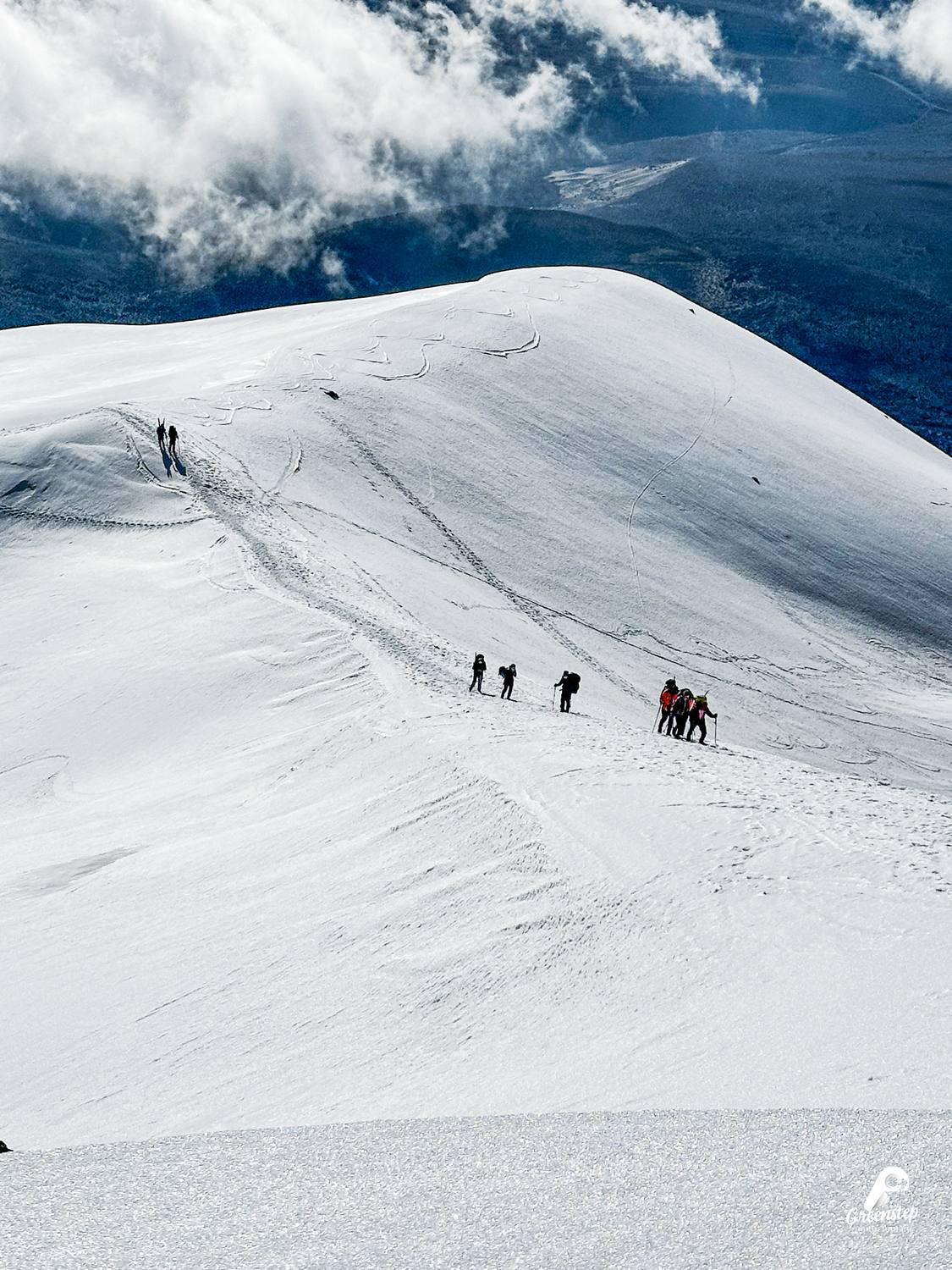
We leave the refuge (or the High Camp) and climb about 1400 m of elevation gain, in about 8 hours, roped up and with crampons and ice axe. We must reach the summit by 7:00 am at the latest.
4
Descent
There is no fixed return time: it depends on how long each person takes to come down.
5
Return to Riobamba
We descend and return to Riobamba.
Why at night?
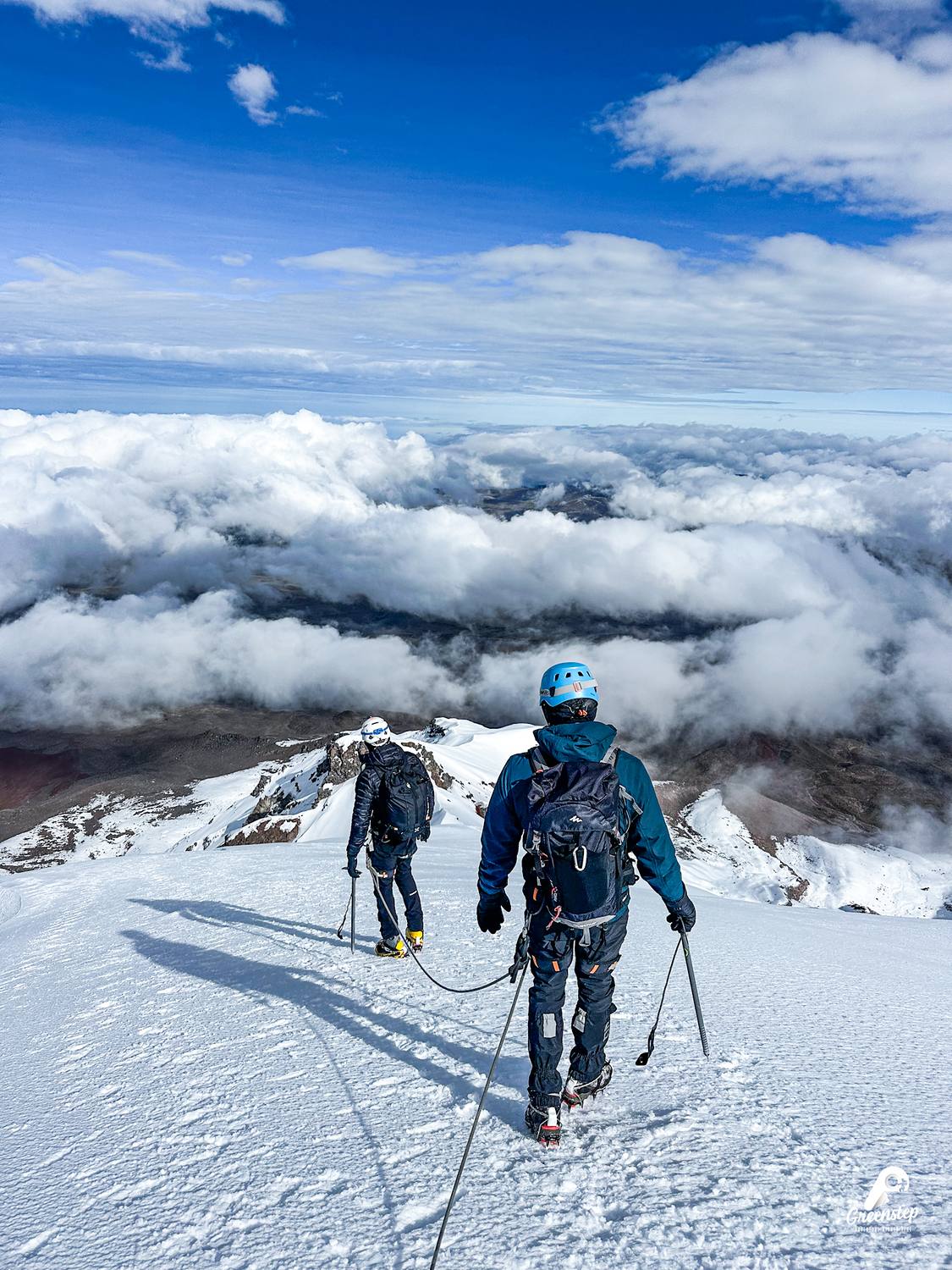
We set out at night because the snow is firmer and you move forward more safely. And we have to be back before the sun warms the route.
Gear
What you need to climb
Provided by Greenstep
Technical equipment included
- Semi-rigid high-mountain boots
- Waterproof jacket and pants
- Gaiters
- Crampons
- Harness
- Carabiner
- Safety line (on Chimborazo)
- Gloves
- Helmet
- Headlamp (batteries not included)
- Ice axe
- Sleeping bag rated for temperatures below 0 °C
- 50 L backpack
You bring
Essentials
- Base layer (thermal Lycra)
- Mid layer (fleece or down)
- Base-layer gloves
- Double socks: one compression pair and one merino wool pair
- Summit daypack (30 L maximum)
- Hydration
- Energy bars or nuts
- Sunscreen
- UV-protection glasses
- Buff, balaclava or cap (not cotton)
- Trekking shoes Optional: you can use the high-mountain boots we already include
The essentials are what you bring; they are not included. Without these items the summit climb cannot take place.
Refuge
Where you sleep: the Carrel refuge
It is the base of the expedition: you have dinner, rest a few hours and set out for the summit between 10 pm and 11 pm. We sleep at the Carrel refuge, at about 4850 m. Higher up, at about 5000 m, is the Whymper refuge.
Altitude
≈ 4850 m
To the summit
1400 m · about 8 h
High Camp (optional)
5300 m · at additional cost and with prior arrangement
How you sleep
In bunk beds, with dinner, breakfast, hot drinks and a snack before the climb. We include a sleeping bag rated for temperatures below 0 °C.
Getting there
Getting to the refuge
- Riobamba, the expedition's departure point. We can also arrange transport from other cities, at an additional cost.
- Vehicle transfer to the refuge: about 50 minutes from Riobamba. The entry permit to the reserve is included in the expedition.
- Carrel refuge, at about 4850 m.
- From the refuge, about 1400 m of elevation gain to the summit, at 6263 m, in about 8 hours.
Altitude profile (visual reference from 4600 m)
Summit
6263 m
+ ≈ 960 m
High Camp
5300 m
+ ≈ 450 m
Refuge
≈ 4850 m
You can reach the refuge by vehicle. From there it is about 1400 m to the summit. Beyond that, the ridge demands a professional guide, equipment, experience and acclimatization: that is why the expedition includes guide and equipment.
See the expeditionBefore you go
Best season and preparation
Best season
You can climb all year round: there is no specific season. From June to September it tends to be windier and colder.
How to prepare
Previous experience, very good physical fitness and being acclimatized are required. We suggest climbing another snow-capped peak first, such as Cotopaxi: it helps with fitness and acclimatization.
See 3 summits in 7 daysFrequently asked questions
What people ask us most
How hard is it to climb Chimborazo?
On our scale, 9/10: it is considered the most demanding in the country because of its long ridge. It is about 1400 m of elevation gain and about 8 hours of climbing. Previous experience, very good physical fitness and being acclimatized are required.
Do I need previous experience?
Yes. We suggest climbing another snow-capped peak first, such as Cotopaxi: it will help with fitness and acclimatization.
How long does the expedition last?
Two days and one night: departure from Riobamba to the refuge, dinner and rest, climb from 10 pm or 11 pm, summit by 7:00 am at the latest, then descent and return to Riobamba.
What is included?
Professional guide (at least 1 for every 2 participants), transport, equipment, refuge accommodation, entry permit to the reserve, dinner, breakfast, hot drinks and a snack before the summit climb.
How do you sleep at the refuge?
In bunk beds. We include a sleeping bag rated for temperatures below 0 °C, plus dinner, breakfast, hot drinks and a snack before the climb. From Riobamba it takes about 50 minutes to reach the refuge.
Can you sleep higher up?
Yes. Accommodation can be arranged at the High Camp, at 5300 m, at an additional cost and with prior coordination with the Greenstep team.
Is it true that it is the point closest to the sun?
Yes: because of the Earth's equatorial bulge, its summit is the point on the surface farthest from the center of the planet, even farther than the summit of Everest.
Next step
Ready to climb Chimborazo?
A Greenstep advisor will help you on WhatsApp. They can adjust the program, dates and destination to what you need.
Other mountain guides