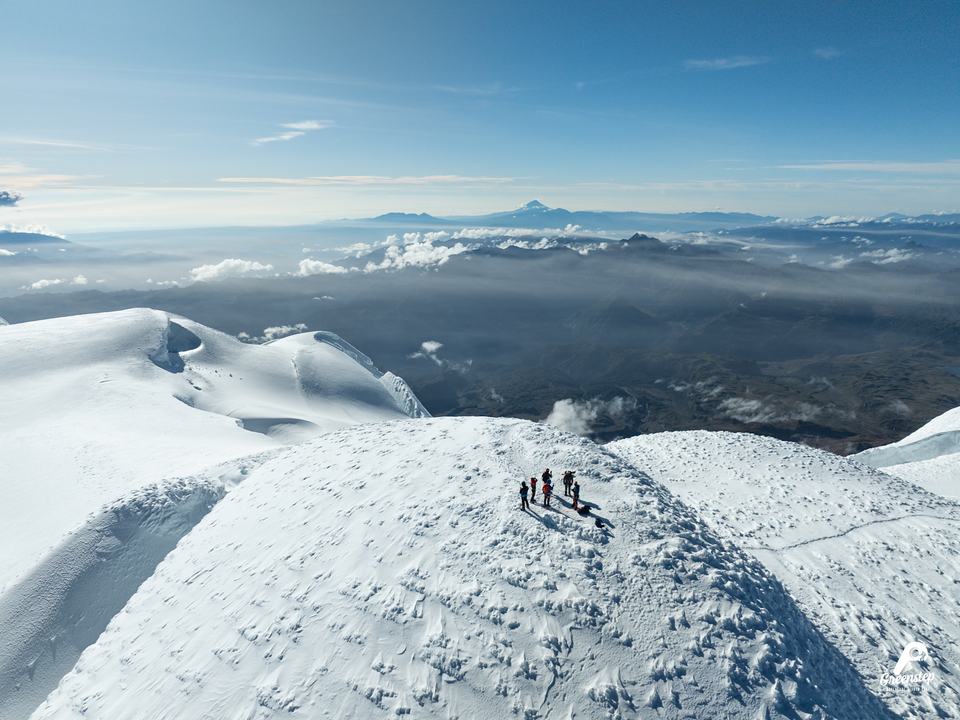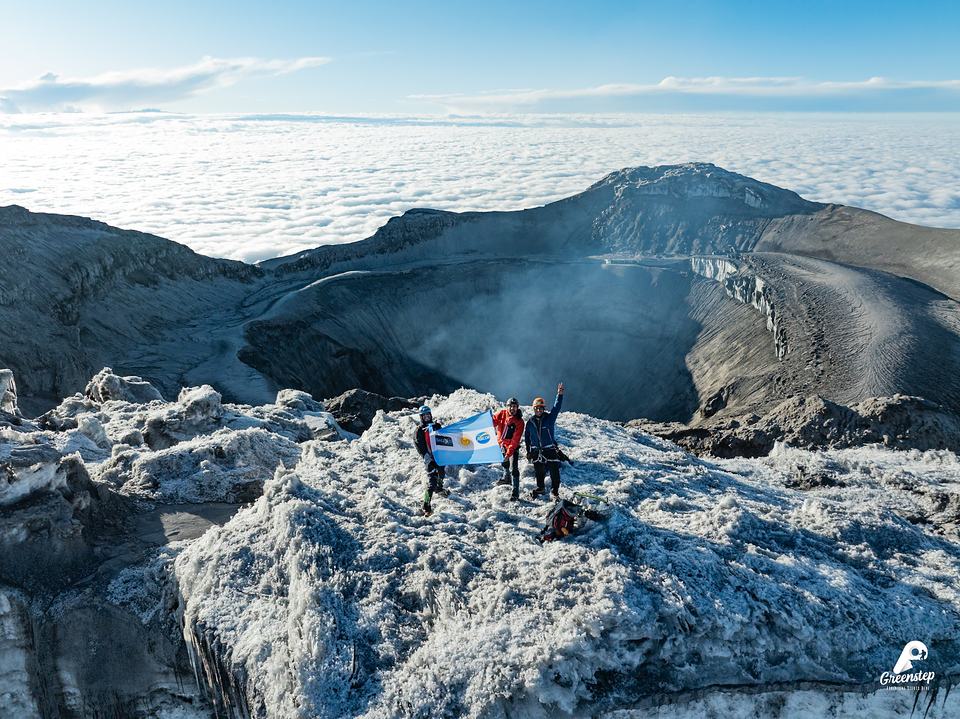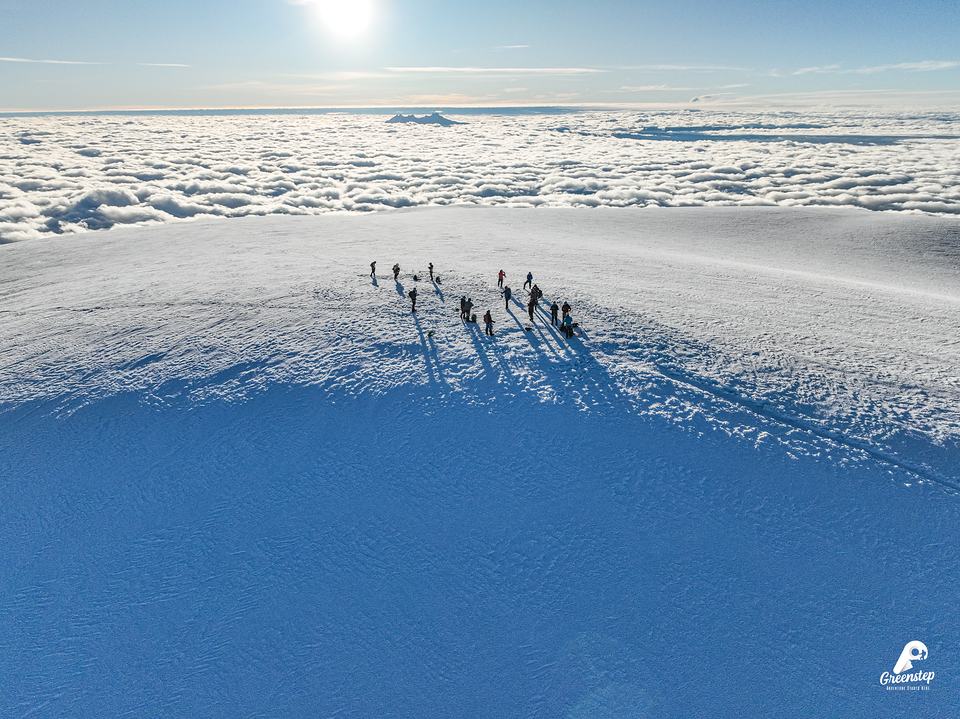

Altitude
5758 m
Camping area
4800 m
Elevation gain to the summit
about 960 m
Climbing time
about 7 h
First ascent
1880
Difficulty
8/10
Why climb it
Four reasons to climb Antisana
01
One of the most technical peaks in the country
Between the provinces of Napo and Pichincha, it is a mountain to test your experience on snow and ice.
02
Technical ice axes for a demanding glacier
Because of the technique it demands, the equipment includes technical ice axes. It is a climb for those who already master the basics.
03
Camping at 4800 m, deep in the high mountains
You sleep in a tent at 4800 m and set out in the early morning: two days and one night from Machachi.
04
A landscape of páramo, glacier and condors
The volcano lies inside Antisana National Park, habitat of the Andean condor. Its meltwater supplies water to Quito.
Who is it for? For mountaineers with previous experience on snow and ice. Not recommended for beginners: if you are unsure, ask a Greenstep team member which mountain suits you first.
See the expedition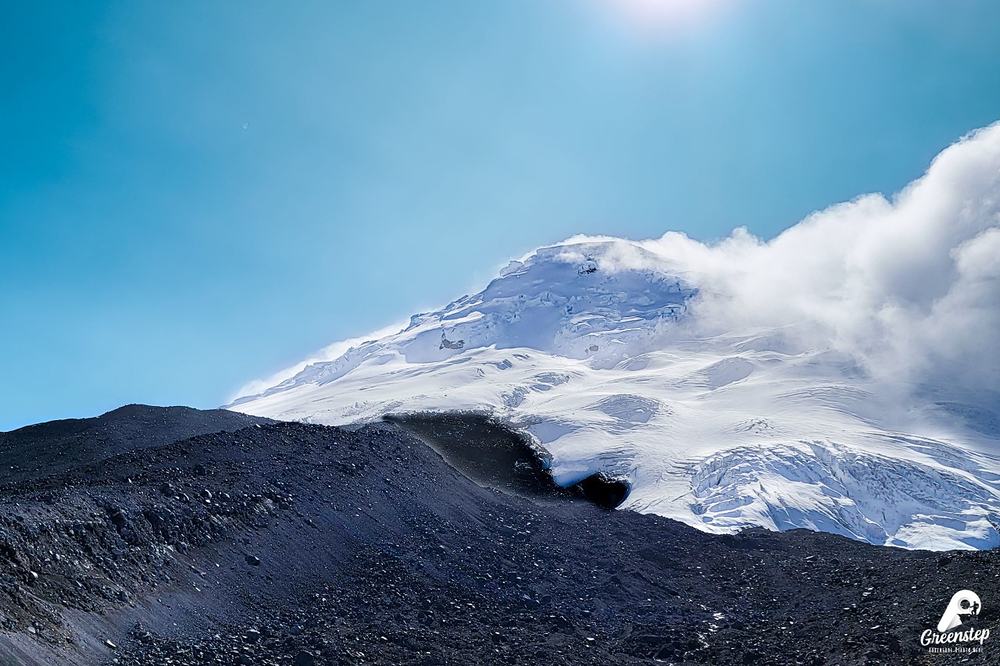
What makes it special
A giant of ice and páramo
Ecuador's fourth-highest peak
At 5758 m, only Chimborazo, Cotopaxi and Cayambe are higher.
A potentially active volcano
It formed on the remains of an ancient caldera and is now covered in glaciers. Its last recorded eruption was around 1801-1802.
A glacier that supplies water to Quito
The volcano's meltwater and páramos are one of the capital's main sources of drinking water.
Antisana National Park
Its surroundings protect páramos, lakes and glaciers, and are the habitat of the Andean condor.
Its name
Why is it called Antisana?
According to several sources, the name comes from Cañari and can be translated as “lamb” or “dark mountain”.
As with other mountains in the country, there is no single, definitive explanation: it is one of those questions the mountain has not yet answered.
Cañari
Antisana
lamb or dark mountain
First to climb it
Who climbed it first
1802
Alexander von Humboldt
The German naturalist tries to climb the volcano but does not reach the summit.
1880
Edward Whymper, Jean-Antoine and Louis Carrel
The British mountaineer and his Italian guides make the first ascent in March 1880 and reach the summit.
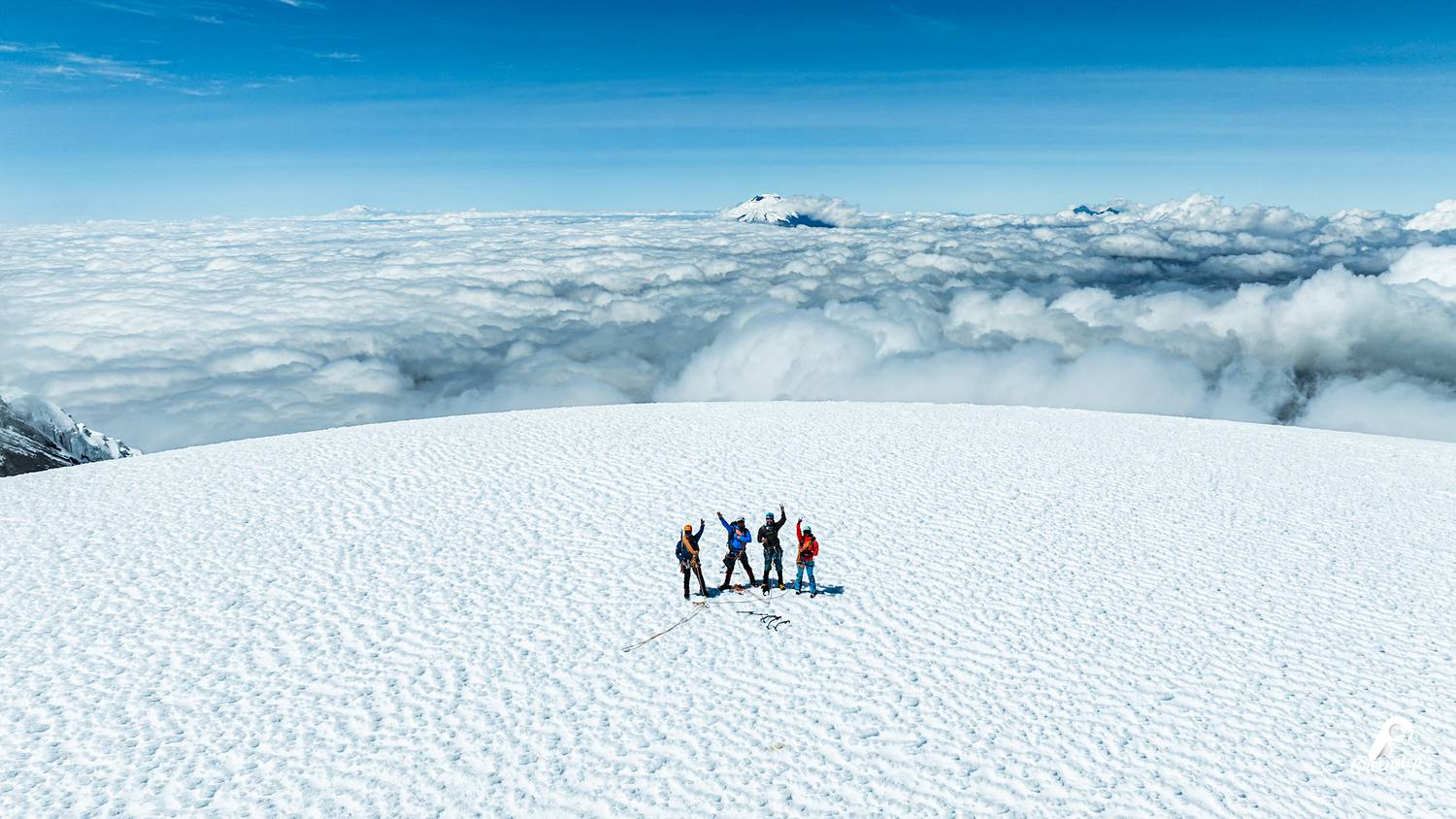
How the climb works
What summit day is like
1
Machachi → Píntag
We meet in Machachi at the time agreed with the guide team and set out for Píntag.
2
Park checkpoint and camping area
We continue to the park checkpoint. Once the entry process is done, we head to the camping area, at 4800 m, where we set up the tents.
3
Technical briefing and dinner
Technical briefing on how to use the equipment, then dinner. You bring your own food and we cook it on the camping stoves we provide. Then, rest.
4
Early morning, the summit
We start the climb: about 960 m of elevation gain from the camp, with a climbing time of about 7 hours, with crampons and technical ice axes.
5
The return
After the summit we return to camp, break camp and head back to Machachi.
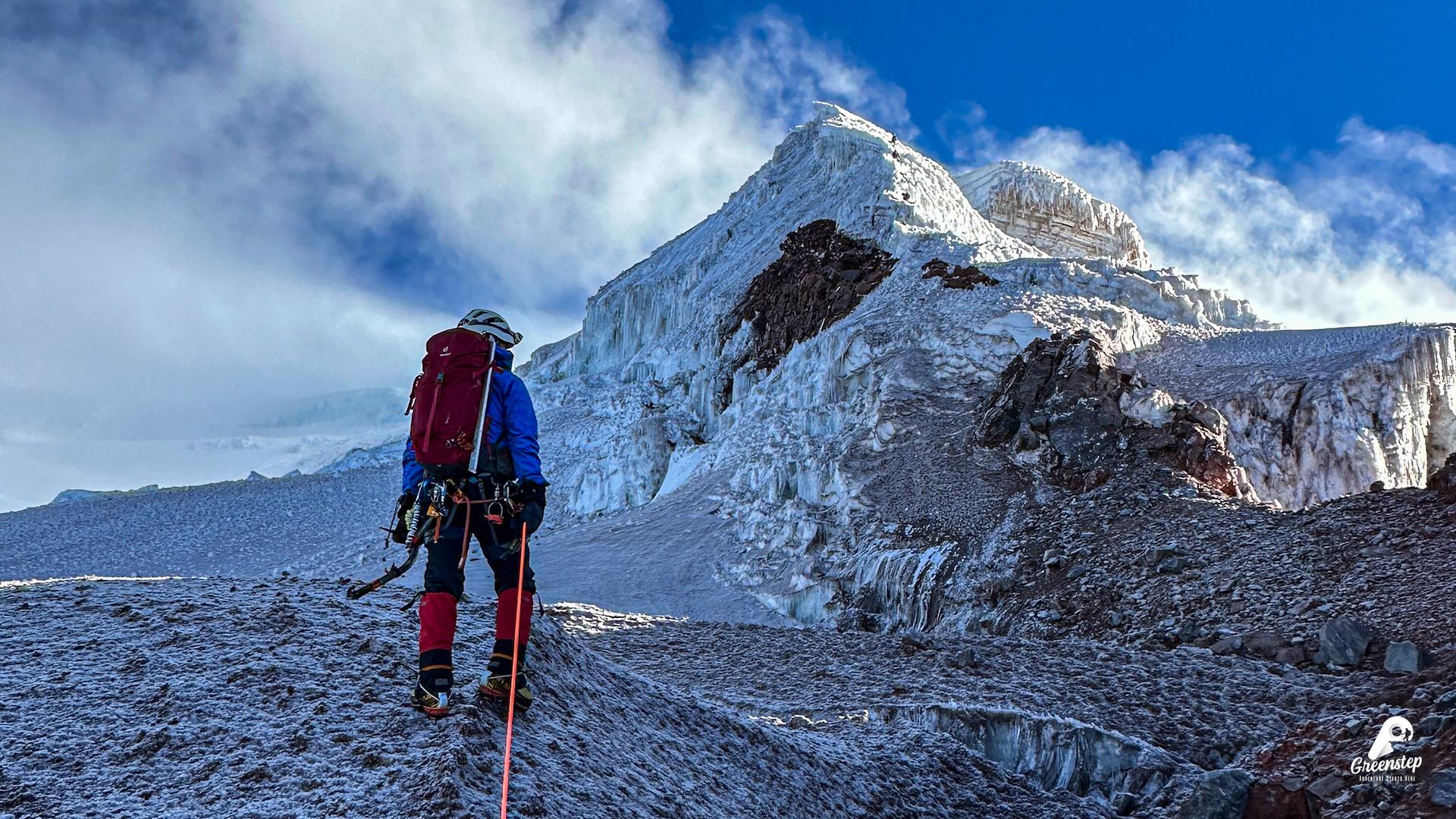
Why in the early morning?
We set out in the early morning because the snow is firmer, so we get back down before the sun softens the glacier.
The departure time
It is agreed in advance with the guide team. Times are approximate.
Gear
What you need to climb
Provided by Greenstep
Technical and camping equipment included
- Semi-rigid high-mountain boots
- Waterproof jacket and pants
- Gaiters
- Crampons
- Harness
- Carabiner
- Gloves
- Helmet
- Headlamp (batteries not included)
- Technical ice axes (2)
- Sleeping bag rated for temperatures below 0 °C
- 50 L backpack
- Shared camping tents
- Sleeping pad
- Camping stoves
You bring
Essentials
- Base layer (thermal Lycra)
- Mid layer (fleece or down)
- Base-layer gloves
- Double socks: one compression pair and one merino wool pair
- Summit daypack (30 L maximum)
- Hydration
- Energy bars or nuts
- Sunscreen
- UV-protection glasses
- Buff, balaclava or cap (not cotton)
- Food for your dinner and breakfast
- Trekking shoes Optional: you can use the high-mountain boots we already include
The essentials are what you bring; they are not included. Food is not included: you bring it and it is cooked on the camping stoves we provide. Without these items the summit climb cannot take place.
Camp
The camping area, at 4800 m
It is the base of the expedition: this is where the tents are set up, the technical briefing is given, dinner is eaten and you rest for a few hours before heading to the summit.
Camp altitude
4800 m
To the summit
960 m · about 7 h
How you sleep
In shared tents, with a sleeping pad and a sleeping bag rated for temperatures below 0 °C.
How you cook
With the camping stoves we provide. You bring the food for dinner and breakfast.
Getting there
Getting to the camping area
- Machachi, the expedition's meeting and departure point. We can also arrange transport from other cities, at an additional cost.
- Vehicle transfer via Píntag to the park checkpoint (the entry permit is included in the expedition). The transfer from Machachi takes about 2 hours 30 minutes.
- Camping area, at 4800 m: we set up the tents, have dinner and rest.
- In the early morning, summit climb, at 5758 m: about 960 m of elevation gain and about 7 hours.
Altitude profile (visual reference from 4400 m)
Summit
5758 m
+ 960 m · about 7 h
Camp
4800 m
From the camp, the glacier demands a professional guide, equipment and experience: that is why the expedition includes both.
See the expeditionBefore you go
Best season and preparation
Best season
You can climb all year round: there is no specific season. From June to September it tends to be windier and colder.
How to prepare
Previous experience on snow and ice, good physical fitness and good hydration are required. Good preparation is to climb another snow-capped peak first, such as Cotopaxi.
See the Cotopaxi guideFrequently asked questions
What people ask us most
How hard is it to climb Antisana?
On our scale, 8/10: it is one of the most technical mountains in the country and is not recommended for beginners. It is about 960 m of elevation gain from the camp, in about 7 hours, with crampons and technical ice axes.
How long does the expedition last?
Two days and one night: departure from Machachi, camping at 4800 m, early-morning climb, and return to camp and to Machachi.
What is included?
Professional guide (at least 1 for every 2 participants), transport, mountain equipment, shared camping tents, sleeping pads, entry permit and camping stoves. Food is not included.
Do I need previous experience?
Yes. Because of its technical nature, Antisana is not recommended for beginners: it is best to have climbed other snow-capped peaks before and to have good physical fitness.
How high is the camp and how long does it take to get there?
At 4800 m. The transfer from Machachi takes about 2 hours 30 minutes. From the camp there are about 960 m of elevation gain to the summit.
Next step
Ready to climb Antisana?
A Greenstep advisor will help you on WhatsApp. They can adjust the program, dates and destination to what you need.
Other mountain guides